Nursery sleep guide
Choosing an Organic Crib Mattress: Materials, Fit, and Care
The word “organic” can sound like a complete answer. On a crib mattress, it is only a starting point. Construction, firmness, certification, fit, and care all deserve their own careful look—especially when the product will become part of a baby’s sleep space.
Nursery shopping has a way of turning a simple question into a vocabulary test. A mattress may be described as organic, natural, breathable, non-toxic, or chemical-free, while its label lists several layers, covers, and treatments in smaller type. Some claims refer to a particular fiber; others apply to a finished product or a manufacturing process. The phrases can sound interchangeable. They are not.
For parents comparing organic crib mattresses, the useful work happens beneath the headline. What is the mattress made of? Which component does a certification cover? Is the surface firm and flat? Does the mattress fit the crib without a meaningful gap? And what does the manufacturer say about cleaning, moisture, and replacement? A methodical answer to those questions is more valuable than a promise wrapped in reassuring adjectives.
This guide explains common crib mattress materials, the limits and value of certifications, practical fit checks, and everyday care. It is educational information, not a substitute for current safe-sleep guidance or the instructions supplied with a particular crib and mattress. When details conflict, follow the applicable manufacturer instructions and guidance from recognized public-health and product-safety authorities.
Start with the sleep space, not the label
A crib mattress has a narrow job: it should create a firm, flat surface that fits the crib designed to receive it. This is not the moment to optimize for the plushness that might make an adult bed appealing. Soft toppers, extra padding, pillows, quilts, and loose bedding can change the surface and introduce hazards. A crib mattress should be used as intended, without improvised layers that alter its firmness or fit.
Safe sleep recommendations can change as evidence and standards are reviewed. Families should consult current guidance from their pediatric health professional and relevant public-health authorities, and use a crib that meets the safety requirements applicable in their location. The crib’s instructions matter too: mattress dimensions, permitted mattress heights, and other details may vary by model.
In other words, “organic” is a material or production-related description, not a safety category by itself. It does not establish that a mattress is the correct size, sufficiently firm, compatible with a particular crib, or appropriate for a specific use. Treat those questions as separate checks.
What “organic” may describe
In a mattress, organic claims most often concern fibers such as cotton or wool, though products may combine natural fibers with latex, foam, metal components, adhesives, or other materials. A label may describe one layer, the cover fabric, the fill, or a larger share of the product. The exact scope matters. “Organic cotton cover,” for example, does not necessarily mean every component of the mattress is organic.
Read the materials list as a map of the construction, not as a verdict. Look for specific names and locations: Is cotton used in the outer fabric, padding, or both? Is latex a core, a comfort layer, or a small component? Does the description identify the type of foam or explain how the mattress is assembled? If a listing relies on broad language but offers little detail, seek a product specification or ask the manufacturer for clarification.
Natural origin also does not automatically determine performance. A natural material can be firm or soft depending on its design and amount. A synthetic material can be used in a product built to meet relevant requirements. For crib use, construction and the product’s intended use deserve at least as much attention as the origin of its ingredients.
Organic cotton: cover, padding, or both?
Cotton is commonly used in mattress covers and quilted layers. Depending on the weave and construction, it may provide a familiar textile surface and can be incorporated into a range of designs. When a product identifies organic cotton, check which part contains it and whether the claim is supported by a clearly named certification or documentation.
The feel of a mattress is not determined by cotton alone. A cotton cover can sit over latex, foam, springs, or another core, and each design behaves differently. The cover’s role may be to enclose the mattress, contribute a thin layer of cushioning, or form part of a more complex quilted surface. A soft-feeling outer fabric does not tell you whether the underlying sleep surface is firm enough for its intended use.
Cotton can absorb moisture, which makes care instructions particularly relevant. Follow the maker’s directions if a spill occurs; do not assume that a cover is removable or washable simply because it is made of cotton. Washing or drying a component contrary to the instructions may affect its shape, fit, or performance.
Latex and other core materials
Latex appears in some mattresses as a supportive or cushioning layer. The term can refer to different formulations and manufacturing approaches, so a concise materials statement is more useful than the word alone. If a mattress includes latex, find out where it sits in the construction and whether the product’s documentation identifies the type. Do not infer that a mattress is made entirely of latex from a general description.
Other crib mattress constructions may use foam, innersprings, or combinations of materials. Foam designs can vary in density and structure; spring designs can differ in their core and surrounding layers. Each construction can be engineered with a firm, flat surface, but the label or an adult’s quick press is not a substitute for the manufacturer’s stated specifications and applicable safety information.
Breathability is often used as a selling point, but it is not a single standardized promise. A fabric’s weave, the arrangement of internal layers, and the overall design all influence how air may move through a product. No breathability claim should be treated as permission to add bedding, modify the mattress, or depart from safe-sleep practices.
Firmness and construction: the practical questions
For an infant sleep surface, firmness is a functional consideration, not a luxury preference. The mattress should feel firm and remain flat in the way its manufacturer specifies. Avoid evaluating it by adult comfort standards: a surface that feels invitingly cushioned to a grown-up may not be suitable for an infant’s sleep space.
When reviewing a product description, look for a clear statement that the mattress is designed for crib use and for the stage or stages it is intended to serve. Some products are reversible or offer different surfaces for different ages; others are not. If a mattress has two sides, use only the side appropriate to the child’s age and follow the instructions for changing sides. Do not assume that every dual-sided model follows the same schedule or design.
Construction details also affect upkeep. A tightly enclosed core, a removable cover, and a waterproof layer each present different cleaning questions. The more clearly a manufacturer explains these components, the easier it is to make an informed choice and care for the mattress without damaging it.
How to read mattress certifications
Certifications can help make a materials claim more specific, but they are not interchangeable. One program may address the organic status of a fiber or the processing chain; another may evaluate chemical emissions or product-level attributes. A certification is useful only when you understand what it covers and can verify that it applies to the product or component being considered.
Look for the certification’s full name, the organization that administers it, and the scope of the claim. Does it apply to the cotton, the latex, the fabric, or the finished mattress? Does the product page identify a certificate or provide a way to confirm it? Be cautious when a retailer uses a logo without explaining its relevance, or when a phrase such as “certified organic” appears without saying what was certified.
Certifications do not answer every question. A credential related to materials does not, by itself, establish crib fit, mattress firmness, durability, or compatibility with a particular model of crib. Nor should a certification be read as a medical guarantee. It is one piece of documentation within a broader assessment.
- Identify the exact certification rather than relying on a generic badge.
- Check whether it covers an ingredient, a layer, a facility, or the complete product.
- Look for product-specific documentation and current details from the certifying organization.
- Keep certification claims separate from safety and fit checks; each addresses a different concern.
When the description is unclear, ask a direct question: “Which components are covered by this certification, and can you provide the product-specific documentation?” A clear response should name the component and the certifying program. If the answer remains vague, compare it with products whose specifications are more transparent.
Fit: the check that should never be skipped
A mattress that is too small for its crib can leave a gap; one that is too large may not sit correctly. A snug fit is essential. Begin with the crib manufacturer’s instructions and the mattress dimensions, then confirm that the mattress is intended for that crib size. “Standard crib size” is useful shorthand, but the crib’s own specifications are the authority for a particular product.
After placing the mattress in the crib as directed, inspect the perimeter. The mattress should sit flat and snugly within the frame, without a substantial space along any side. Do not rely on a loose fitted sheet to disguise a mismatch. If you are unsure whether the fit is acceptable, stop using the setup until you have checked with the crib or mattress manufacturer or another qualified source.
Also check the mattress height setting and the crib assembly. A correctly sized mattress cannot compensate for a crib that is assembled incorrectly, damaged, or used in a way its manual does not allow. Recheck the fit if the mattress is replaced, the crib is reassembled, or the sleep-space arrangement changes.
A simple fit checklist can help:
- Confirm the mattress dimensions against the crib manual—not just a retailer’s category label.
- Make sure the mattress lies flat and is designed for the crib’s frame.
- Inspect all edges for gaps or areas where the mattress does not sit securely.
- Use only the mattress and accessories permitted by the crib manufacturer.
- Revisit the setup after moving, adjusting, or reassembling the crib.
Care, moisture, and everyday maintenance
Care starts with the label. Some mattress covers are removable; some are not. Some surfaces can be spot-cleaned, while others have restrictions on liquids, detergents, or drying. A waterproof component may be built into the mattress or sold separately, and the presence of one does not mean the entire mattress can be soaked or machine-washed.
Before the mattress is used, read and retain the care instructions. If a spill or accident occurs, follow the manufacturer’s method and allow any permitted cleaned area to dry completely before returning the mattress to use. Avoid bleach, fragrance sprays, steam, or other cleaning methods unless the instructions explicitly allow them. Unapproved products can damage fabrics and finishes, and lingering dampness can create its own maintenance problem.
Inspect the mattress periodically for visible damage, persistent odor, torn seams, exposed internal material, or a surface that no longer appears flat and intact. Check the maker’s recommendations about use and replacement. A mattress that has been damaged, has become misshapen, or no longer fits securely should not be kept in service simply because it was initially a carefully chosen product.
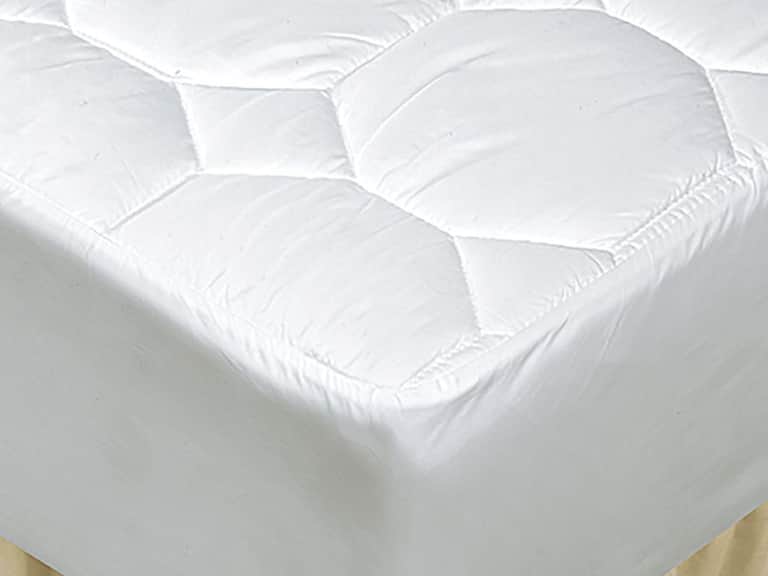
Mattress protectors and pads require equal care. A protector should be specifically compatible with the crib mattress and should not make the sleep surface loose, padded, or uneven. Do not add a topper to change firmness or comfort unless the mattress and crib manufacturers explicitly permit it and current safety guidance supports its use. For infant sleep, simple is generally the more prudent approach: the fitted sheet and the approved mattress, with no extra layers.
Common claims, considered calmly
“Natural” means safer. Natural describes an origin, not a complete safety assessment. The finished product still needs to be appropriate for crib use, correctly fitted, and used as instructed.
“Organic” means every part is organic. Not necessarily. The claim may apply to one fiber or component. Ask what is included and look for documentation that identifies the scope.
“Breathable” means no other sleep precautions are needed. No. A breathability claim does not replace safe-sleep guidance, a firm flat surface, correct fit, or the manufacturer’s instructions.
“Waterproof” means easy to clean any way I choose. Not necessarily. Waterproofing may describe a particular layer, and cleaning restrictions still apply. Follow the product’s care label.
“One mattress works for every crib.” No. Check the crib’s required dimensions and approved use. A label indicating a general size is not enough if the actual fit is uncertain.
A practical comparison method
When two or three options remain, put their specifications side by side. Compare the intended use, dimensions, construction, materials by layer, certifications and their scope, care requirements, warranty terms, and the manufacturer’s fit guidance. This does not require a complicated scoring system. It requires resisting the temptation to let a single appealing claim stand in for the whole product.
One mattress may emphasize organic cotton, another a latex core, and another a particular certification. Those details are worth noting, but they are not direct substitutes for one another. First rule out products that are unclear about crib use, fit, or care. Then weigh material preferences and documentation among the options that meet the practical requirements.
For families with specific concerns—such as a known sensitivity, a medical question, or uncertainty about a crib’s compatibility—contact the relevant manufacturer or a pediatric health professional. A retailer can clarify product specifications, but a health professional is the appropriate person for individualized medical guidance.
Questions to ask before you decide
- Is this mattress designed and labeled for crib use?
- What are its exact dimensions, and do they match the crib manufacturer’s requirements?
- Which materials are used in the cover, comfort layers, and core?
- What does “organic” refer to in this product, and is that claim documented?
- Which certification applies, and does it cover the material or the finished mattress?
- What firmness and use guidance does the manufacturer provide?
- How should the mattress and any permitted cover be cleaned?
- What signs of wear or damage mean the mattress should no longer be used?
Good product information makes these questions easier to answer. If the answers are scattered across marketing copy, a specification sheet, and a care label, gather them before purchase and keep the instructions afterward. The nursery may be assembled in a rush, but the decision itself does not have to be.
The quieter meaning of a good choice
Choosing an organic crib mattress is not a contest in which the longest list of nature-inspired words wins. It is a practical decision about a specific object in a specific sleep space. Materials matter, and families may reasonably prefer documented organic fibers or a particular construction. Yet those preferences work best when paired with clear product information, a snug fit, a firm and flat surface, and care that follows the maker’s instructions.
The most reliable comparison begins with what can be checked: the crib’s measurements, the mattress dimensions, the construction details, the exact reach of a certification, and the instructions for use. Claims become more useful when they are precise. A calm, evidence-minded approach can make the nursery feel less like a showroom and more like what it is meant to be: a thoughtfully prepared place for rest.